
News
The Evolution of MV Switchgear: From Oil → AIS → SF₆ → SF₆-Free GIS
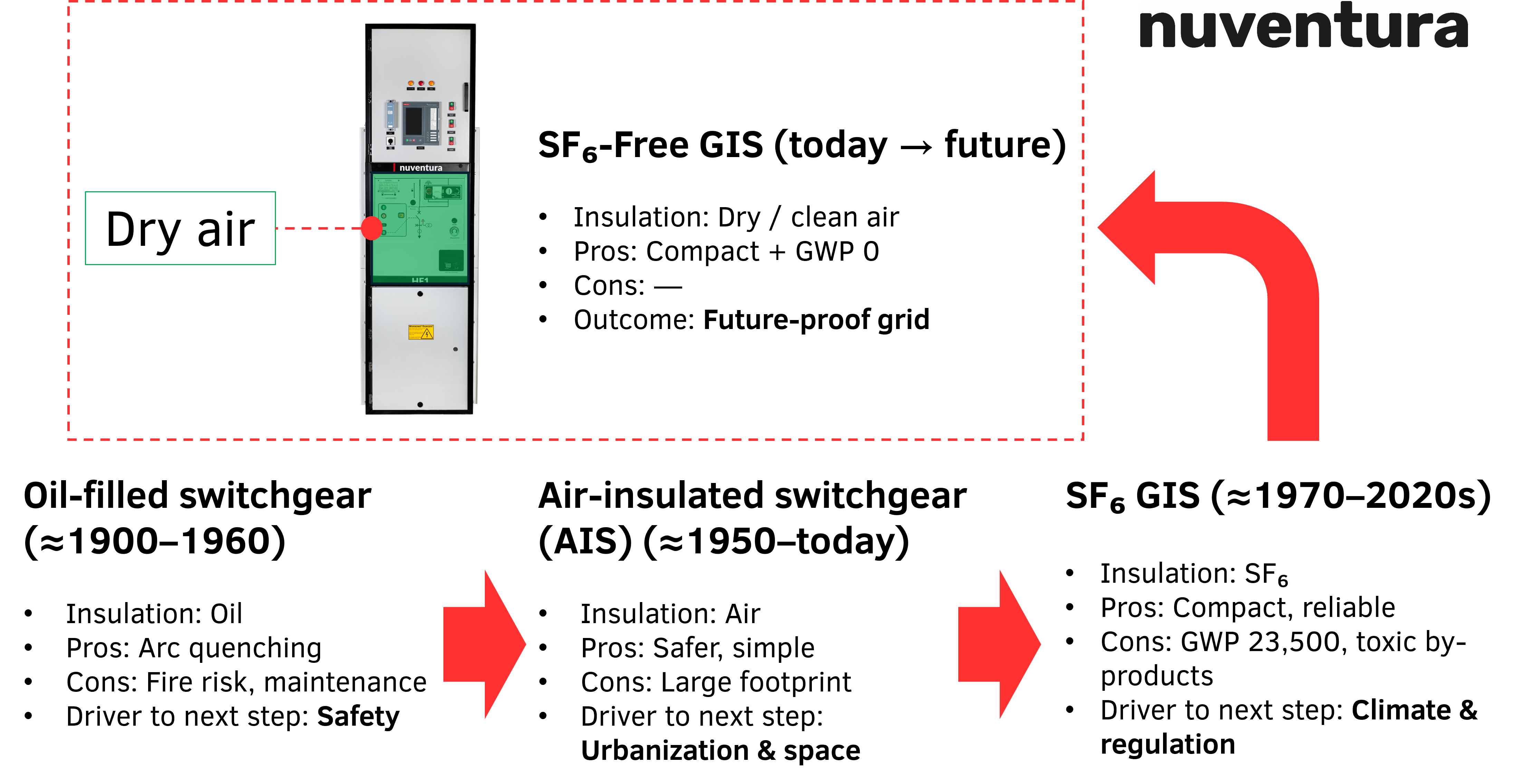
Medium-voltage (MV) switchgear sits at the heart of modern power systems, protecting networks,enabling switching operations, and ensuring safe fault isolation. While today’s switchgear appears highly engineered and compact, it is the result of more than a century of technological evolution.
Each generation of MV switchgear emerged to solve the limitations of the previous one — improving safety, reducing footprint, increasing reliability, and responding to new grid requirements. Most recently, environmental and regulatory pressures have driven the industry toward SF₆-free GIS,marking the next major transition.
This article traces the evolution of MV switchgear from oil-filled designs to modern SF₆-free gas-insulated systems — and explains why the latest shift is not incremental, but structural.
1. Oil-Filled Switchgear: The Starting Point
The earliest MV switchgear designs relied on oil as both an insulating and arc-quenching medium. Oil circuit breakers were widely used throughout the first half of the 20th century.
Why oil was used
- Good dielectric strength
- Effective arc extinction
- Readily available technology
Key limitations
- Fire and explosion risk
- Large physical footprint
- Intensive maintenance
- Oil degradation and contamination
- Environmental hazards from leaks
As networks grew and urbanization increased, the risks and space requirements of oil-filled switchgear became unacceptable — driving the next transition.
2. Air-Insulated Switchgear (AIS): Safer, But Space-Intensive
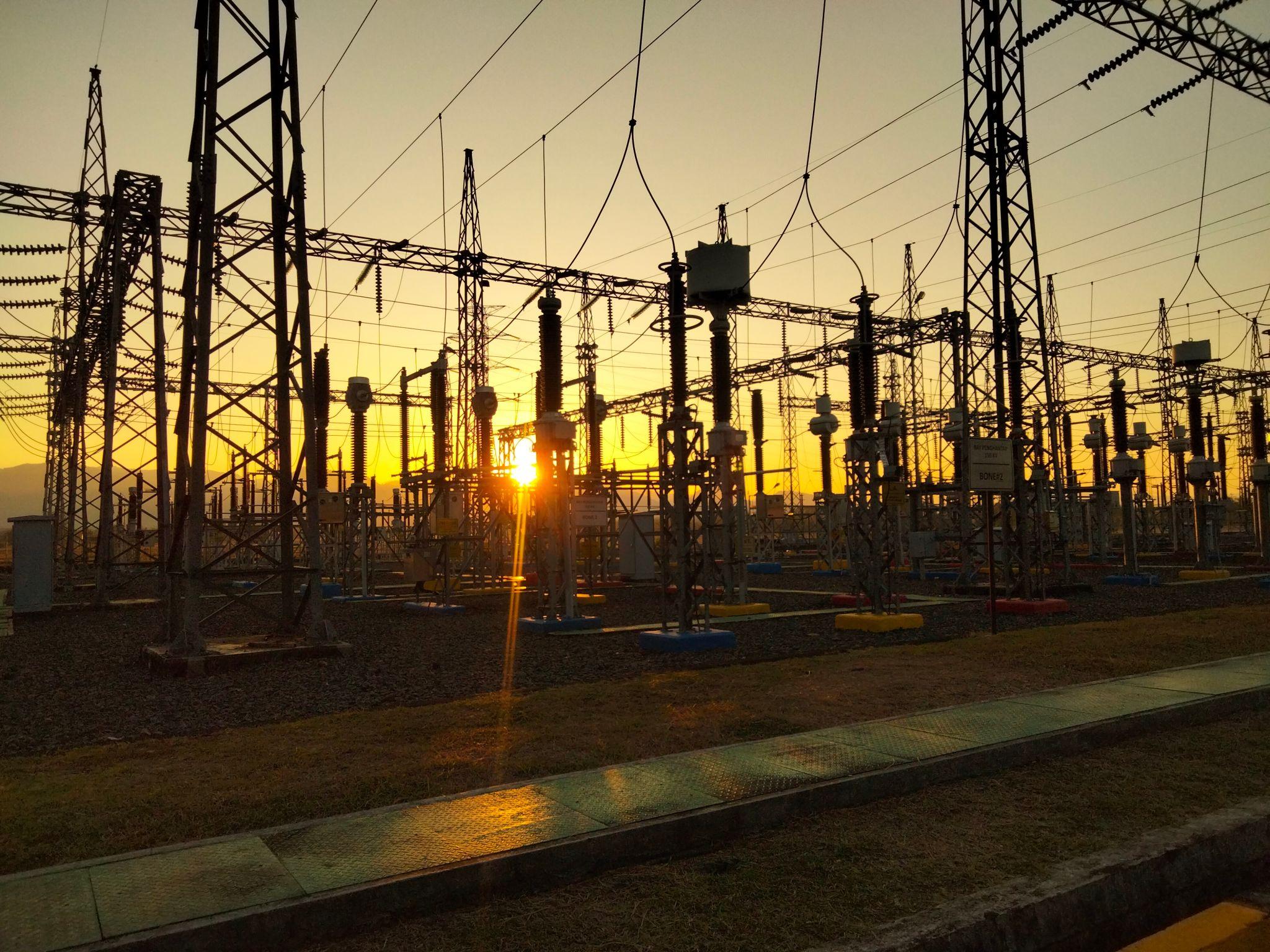
Air-insulated switchgear replaced oil with ambient air as the primary insulation medium. This eliminated fire risk and simplified maintenance.
Advantages of AIS
- No flammable insulation medium
- Simple, robust design
- Easy visual inspection
- Lower environmental risk than oil
Trade-offs
- Large clearances required for insulation
- Very large footprint at higher voltages
- Limited suitability for dense urban environments
- Exposed live parts (higher safety requirements)
AIS remains widely used today, particularly in:
- Outdoor substations
- Rural networks
- Applications with ample space
However,the need for compact substations in cities, industry, and infrastructure projects soon pushed the industry toward gas-insulated solutions.
3. SF₆ GIS: Compactness and Performance at a Cost
The introduction of sulphur hexafluoride (SF₆) in switchgear marked a major breakthrough. SF₆ has exceptional dielectric and arc-quenching properties,enabling a dramatic reduction in size.
Why SF₆GIS took over
- Very high dielectric strength
- Excellent arc-quenching capability
- Extremely compact designs
- Fully enclosed, metal-clad systems
- High reliability in harsh environments
SF₆ GIS became the dominant solution for:
- Urban substations
- Industrial plants
- Underground and indoor installations
- Infrastructure projects (rail, tunnels, data centres)
The hidden downside
Over time,the industry recognised that SF₆ introduced new problems:
- Global Warming Potential ~23,500
- Atmospheric lifetime >3,000 years
- Leakage over long service lives
- Toxic and corrosive decomposition products during arcs
- Complex handling, reporting, and disposal requirements
What once looked like a perfect technical solution became a long-term environmental and regulatory liability.
4. The Turning Point: Regulation and Sustainability
By the 2010s, it became clear that continued reliance on SF₆ was incompatible with climate targets. Regulators, utilities, and manufacturers began seeking alternatives.
Key drivers included:
- Climate legislation (e.g. EU F-Gas regulation)
- Utility net-zero commitments
- ESG reporting requirements
- Rising cost and complexity of SF₆ handling
- Long-term risk of stranded assets
This created the conditions for the next major shift: SF₆-free GIS.
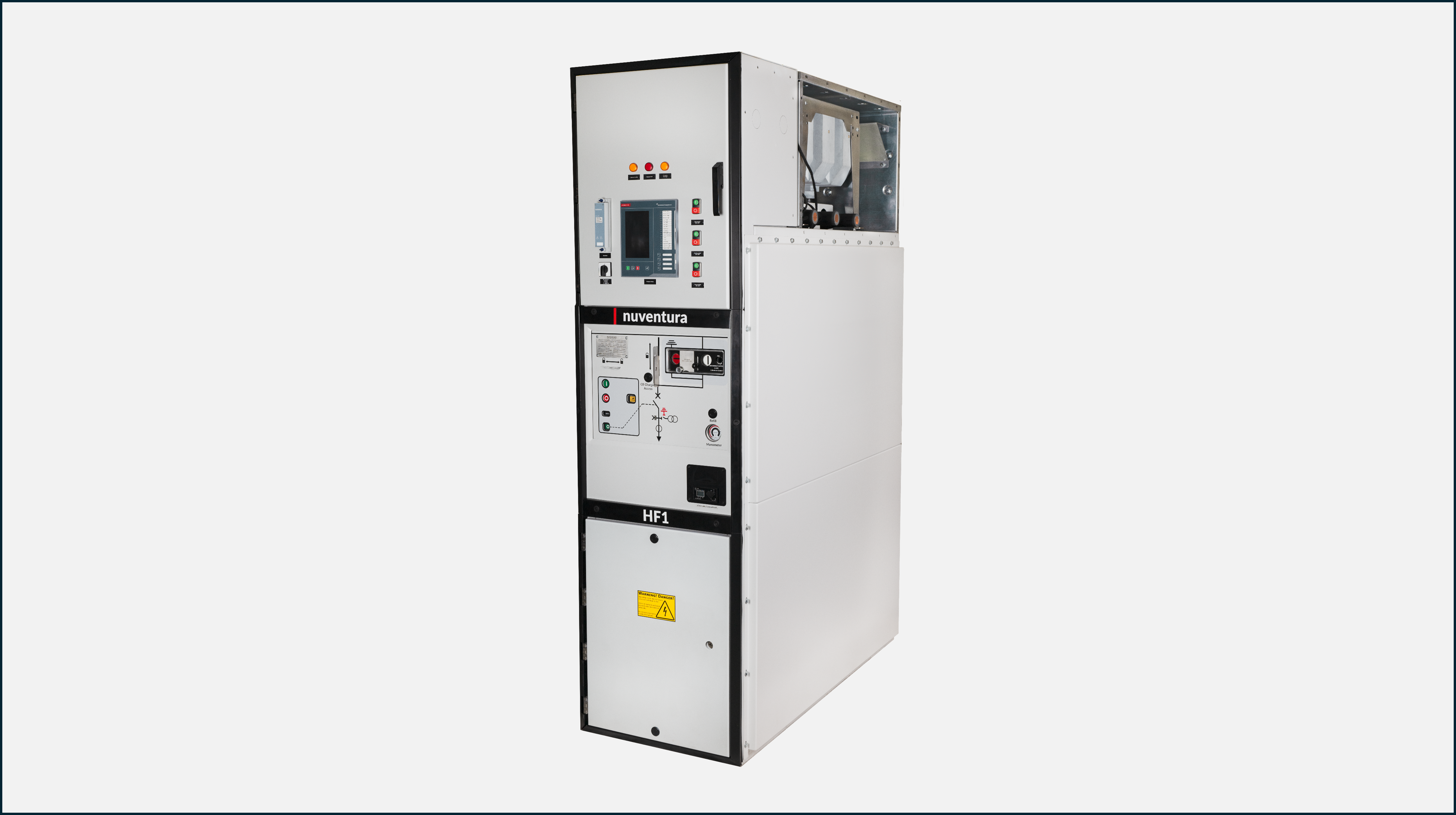
5. SF₆-Free GIS: Combining Compactness with Climate Compatibility
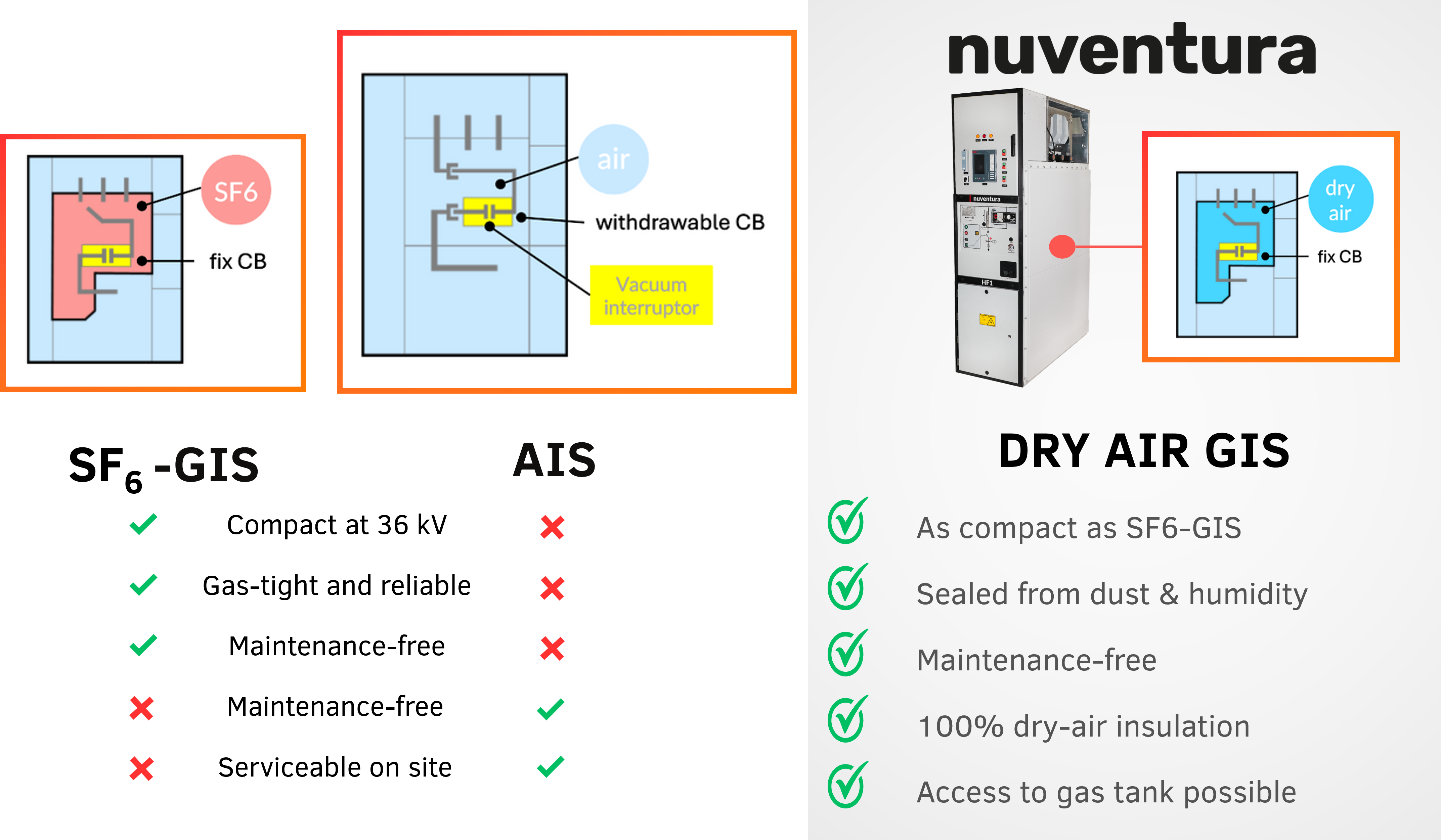
Modern SF₆-free GIS replaces fluorinated gases with dry air or clean air, while using vacuum interrupters for current interruption. Importantly, this is not a return to AIS — but a fundamentally new design philosophy.
Key characteristics
- GWP = 0 insulation medium
- Near-atmospheric operating pressure at lower voltage levels
- Fully metal-enclosed GIS architecture
- High internal arc performance (AFLR up to 31.5 kA)
- No toxic arc by-products from insulation gas
- No gas handling or disposal complexity
What changed technically
- Advanced solid insulation materials
- Optimised electric field control
- Decoupling of insulation (air) and interruption (vacuum)
- Robust mechanical enclosure design
These advances allow SF₆-free GIS to match or exceed the performance of traditional SF₆ GIS — without the environmental burden.
6. A Structural Shift, Not an Incremental One
Unlike earlier transitions, the move to SF₆-free GIS is not just about better performance or smaller size. It fundamentally changes the risk profile of MV switchgear:
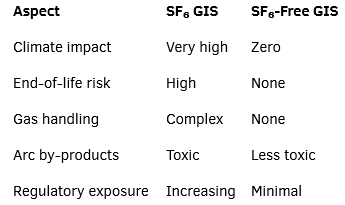
This is why many utilities now see SF₆-free GIS not as an “alternative”, but as the next default standard.
7. What This Evolution Means for Utilities and EPCs
Understanding the evolution of MV switchgear helps buyers make better long-term decisions:
- Oil → solved early switching needs
- AIS → improved safety, but required space
- SF₆ GIS → enabled compact grids, but created climate risk
- SF₆-free GIS → delivers compactness without long-term liability
As grids expand to support renewables, electrification, and data centres, switchgear volumes will increase significantly. Locking in high-GWP technology today creates emissions for decades.
8. Conclusion
The history of MV switchgear is a story of continuous improvement — driven by safety, reliability, and practicality. Today, sustainability has become an equally decisive design criterion.
SF₆-free GIS represents the natural next step in this evolution:
it preserves the compactness and performance benefits of GIS while eliminating one of the most potent greenhouse gases from power infrastructure.
Just as oil-filled switchgear gave way to AIS, and AIS to SF₆ GIS, the transition to SF₆-free GIS marks the beginning of the next era of medium-voltage technology.
Stay informed and inspired
You can also stay informed and inspired by subscribing to our quarterly newsletter

More News


.png)


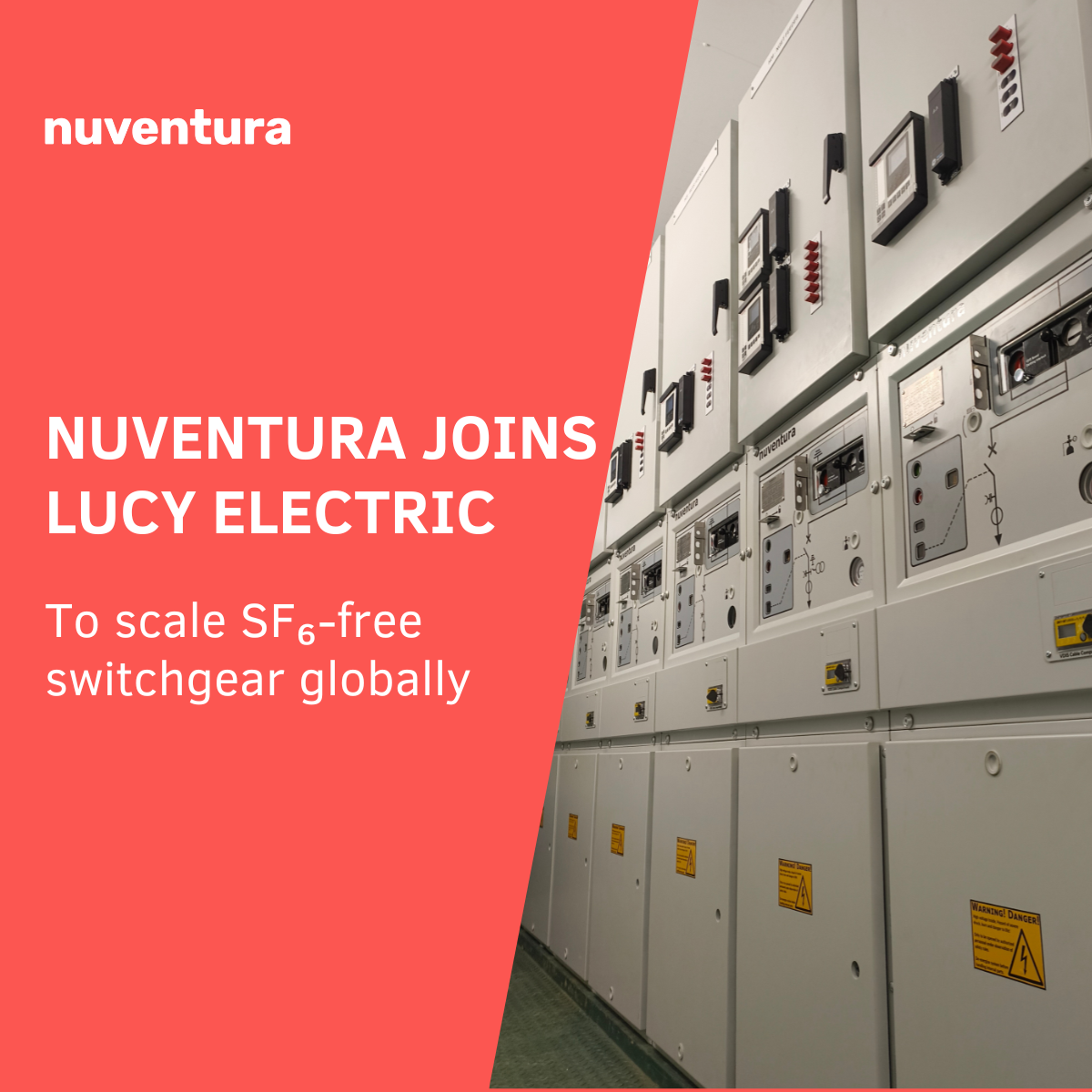
Nuventura joins Lucy Electric to accelerate global adoption of SF₆-free primary switchgear

Total Cost of Ownership: SF₆ GIS vs SF₆-Free Dry-Air GIS
The Evolution of MV Switchgear: From Oil → AIS → SF₆ → SF₆-Free GIS
The Carbon Footprint of SF₆ vs SF₆-Free Switchgear
What Utilities Must Consider in Tender Specifications for SF₆-Free GIS
.png)
Type-Tested MV Switchgear Under IEC 62271-200
_sz3.jpg)
Partial Discharge in MV Switchgear: Causes & Detection
.png)
Key Differences between Primary and Secondary GIS Switchgear
Internal Arc Classification Explained (IAC AFLR, 16/25/31.5 kA Basics)
Environmental Advantages and Potential Carbon Credits to SF₆-free Switchgear in the Indian Context
SF₆ Regulations: What’s Changing (2026–2035)? And Where?
Explanation of the relay protection functions required in MV grids
AIS vs GIS — Combining the Best of Both Worlds with SF₆-Free Technology
Why Voltage Levels Matter in Medium-Voltage Grids
Protection Relays – The Intelligence Behind Medium-Voltage Switchgear
Raising the Bar for Switchgear Safety
Nuventura and Elgór and Hansen enter partnership to bring SF₆-free switchgear to Poland
Nuventura and WESCOSA join forces to bring F-Gas-free GIS to the Middle East

CO7 and Nuventura announce partnership

Nuventura and PMS join forces for a greener future in power solutions

Introducing Nuventura’s ESG function and Cassidy Kuiper
Project Enquiries
Whether it’s SF₆-free switchgear specifications, partnership opportunities or support – our team is ready to answer your questions and find the right eco-friendly solution for your needs.
If you are evaluating SF₆-free switchgear for a new project or looking to replace conventional GIS, our team can help you define the right technical solution. We support customers with product specifications, project planning, partnership discussions and technical clarification throughout the decision-making process. Whether the application is utility, industrial or renewable energy, we work with you to identify the most suitable configuration for your requirements. Contact us to discuss your project in more detail and explore the best SF₆-free option for your application.
Do you have a specific request?
Get in touch