
News
The Carbon Footprint of SF₆ vs SF₆-Free Switchgear
Medium-voltage (MV) switchgear is a long-lived asset — often installed for 30 to 40 years. While it is not an energy-consuming device in the traditional sense, its choice of insulation medium can have a significant climate impact over its lifetime.
For decades, sulphur hexafluoride (SF₆) has been widely used in gas-insulated switchgear (GIS) due to its excellent dielectric properties. However, SF₆ is also the world’s strongest greenhouse gas. As utilities and industries align with net-zero targets, understanding the carbon footprint of SF₆-based vs SF₆-free switchgear has become critical.
This article explains where emissions arise, how they are calculated, and why SF₆-free GIS fundamentally changes the climate equation.
1. Why Switchgear Has a Carbon Footprint at All
Although switchgear does not burn fuel, its carbon footprint arises from three main sources:
- Embedded emissions
- Materials (steel, copper, aluminium, epoxy)
- Manufacturing and transport
- Operational emissions
- Greenhouse gas leakage over the asset lifetime
- Maintenance activities
- End-of-life emissions
- Gas recovery, handling, and disposal
- Risk of residual gas release
For SF₆-insulated switchgear, operational and end-of-life emissions dominate the footprint.
2. SF₆: A Small Quantity with a Massive Climate Impact
SF₆ is used because it is
- Electrically insulating
- Chemically stable
- Non-flammable
Unfortunately, these same properties make it extremely persistent in the atmosphere.
Key facts about SF₆
- Global Warming Potential (GWP): ~23,500
→ 1 kg of SF₆ = 23.5 tonnes of CO₂ (over 100 years - Atmospheric lifetime: >3,000 years
- No natural sinks
Even very small leaks therefore have outsized climate consequences.
3. Where SF₆ Emissions Occur in Real Life
Despite strict handling procedures, emissions occur at multiple stages:
3.1 Manufacturing & commissioning
- Gas filling
- Quality testing
- On-site commissioning
3.2 Normal operation
- Micro-leakage through seals over decades
- Typical guaranteed leakage rates are low, but never zero
3.3 Maintenance & servicing
- Gas handling during repairs
- Human error during filling or recovery
3.4 End-of-life
- Incomplete gas recovery
- Residual gas trapped in compartments
- Disposal and recycling risks
Because GIS assets remain in service for decades, even small annual leakage rates accumulate into material emissions.
4. End-of-Life Reality: Why SF₆ Is Effectively a “Delayed Emission”
A critical but often underestimated aspect of SF₆ is end-of-life disposal.
According to the California Air Resources Board (CARB), the recovery, destruction, and permanent containment of SF₆ is technically complex, energy-intensive, and expensive. Destruction requires specialized high-temperature plasma or thermal oxidation processes, certified facilities, and tightly controlled logistics — all of which limit scalability and increase cost.
While regulations require SF₆ to be recovered at decommissioning, there is no simple or universally deployed pathway to permanently eliminate the gas without risk of release. In practice, recovered SF₆ is often:
- Stored for long periods
- Re-used in other equipment
- Transferred across borders rather than definitively destroyed.
As a result, SF₆ should not be seen as a permanently contained substance, but as a “delayed emission”:
SF₆ that is produced today will, with high likelihood, eventually be emitted into the atmosphere over time.
Given SF₆’s extremely long atmospheric lifetime and very high GWP, this makes every kilogram of SF₆ produced a long-term climate liability, regardless of how carefully it is handled during its service life.
5. SF₆-Free Switchgear: What Changes Fundamentally
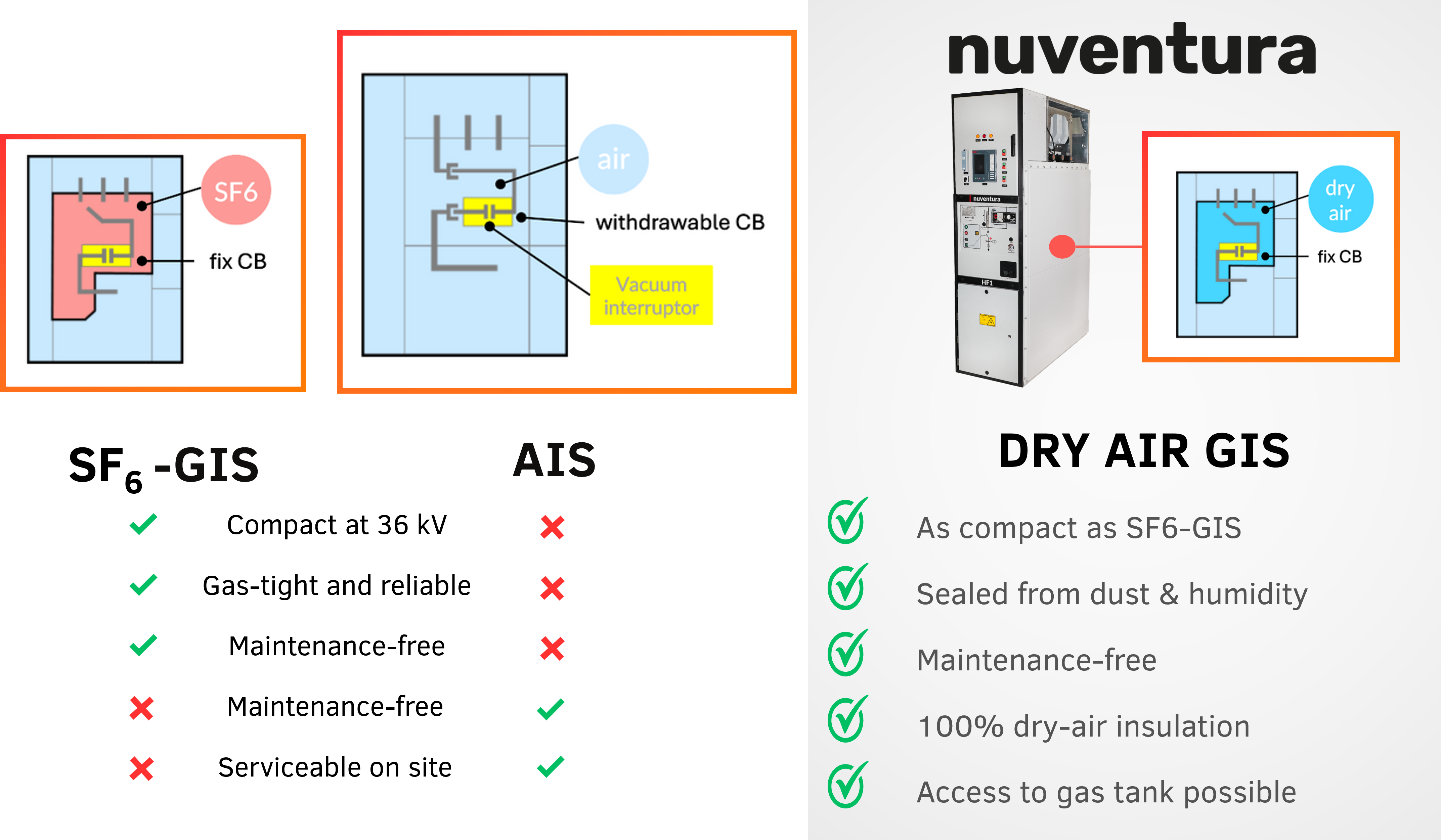
SF₆-free GIS replaces fluorinated gases with dry air or clean air (typically nitrogen/oxygen mixtures) combined with vacuum interruption.
Key differences
- GWP = 0
- No fluorinated greenhouse gases
- No long-term atmospheric persistence
- No climate impact from leakage
Even if all insulation gas were released, the CO₂-equivalent impact is effectively zero.
6. Lifecycle Carbon Comparison: SF₆ vs SF₆-Free GIS
Manufacturing
- Both technologies use similar metals and insulation materials
- Embedded emissions are broadly comparable
Operation
- SF₆ GIS:
- Continuous climate liability due to leakage risk
- SF₆-free GIS:
- No operational greenhouse gas emissions
Maintenance
- SF₆ GIS:
- Gas handling, reporting, certified personnel
- SF₆-free GIS:
- No gas reporting, no special equipment
End-of-life
- SF₆ GIS:
- Mandatory gas recovery and disposal
- Residual emission risk remains
- SF₆-free GIS:
- No greenhouse gas recovery required
Result:
Over its lifetime, SF₆-free GIS has a dramatically lower carbon footprint, even if initial material emissions are similar.
7. Regulatory and Reporting Implications
The climate impact of SF₆ is no longer just an environmental issue — it is a regulatory and financial one.
Utilities and industrial operators increasingly face:
- Mandatory SF₆ inventories
- Leakage reporting
- Carbon accounting under Scope 1 emissions
- Rising carbon prices
- Public ESG disclosure requirements
By contrast, SF₆-free GIS:
- Eliminates SF₆ from Scope 1 emissions
- Simplifies compliance
- Reduces long-term regulatory risk
8. Beyond Carbon: Secondary Environmental Benefits
SF₆-free switchgear also avoids:
- Toxic decomposition by-products during arcs (e.g. HF)
- Special PPE and neutralization procedures
- Environmental risks during accidents
This improves worker safety and reduces indirect environmental impacts.
9. Why Carbon Footprint Matters for Grid Planning
As electricity grids expand to integrate renewables, datacentres, EV charging, and electrified industry, MV switchgear volumes are increasing rapidly.
Choosing SF₆-free technology:
- Prevents long-term locked-in emissions
- Aligns grid expansion with climate targets
- Avoids stranded assets as regulations tighten
In this context, insulation choice is no longer a minor technical detail — it is a strategic climate decision.
10. Conclusion
SF₆-based switchgear carries a hidden but significant carbon footprint, driven by the extreme global warming potential of the gas itself. Even small leakage rates translate into tonnes of CO₂-equivalent emissions over an asset’s lifetime.
SF₆-free GIS fundamentally changes this equation. By eliminating fluorinated gases entirely, it removes one of the most potent greenhouse gas sources from medium-voltage infrastructure — without compromising safety, performance, or reliability.
For utilities, EPCs, and industrial operators serious about decarbonization, SF₆-free switchgear is not just a compliance solution — it is a climate-impact reduction measure.
Stay informed and inspired
You can also stay informed and inspired by subscribing to our quarterly newsletter

More News
.png)


Nuventura joins Lucy Electric to accelerate global adoption of SF₆-free primary switchgear

Total Cost of Ownership: SF₆ GIS vs SF₆-Free Dry-Air GIS
The Evolution of MV Switchgear: From Oil → AIS → SF₆ → SF₆-Free GIS
The Carbon Footprint of SF₆ vs SF₆-Free Switchgear
What Utilities Must Consider in Tender Specifications for SF₆-Free GIS
.png)
Type-Tested MV Switchgear Under IEC 62271-200
_sz3.jpg)
Partial Discharge in MV Switchgear: Causes & Detection
.png)
Key Differences between Primary and Secondary GIS Switchgear
Internal Arc Classification Explained (IAC AFLR, 16/25/31.5 kA Basics)
Environmental Advantages and Potential Carbon Credits to SF₆-free Switchgear in the Indian Context
SF₆ Regulations: What’s Changing (2026–2035)? And Where?
Explanation of the relay protection functions required in MV grids
AIS vs GIS — Combining the Best of Both Worlds with SF₆-Free Technology
Why Voltage Levels Matter in Medium-Voltage Grids
Protection Relays – The Intelligence Behind Medium-Voltage Switchgear
Raising the Bar for Switchgear Safety
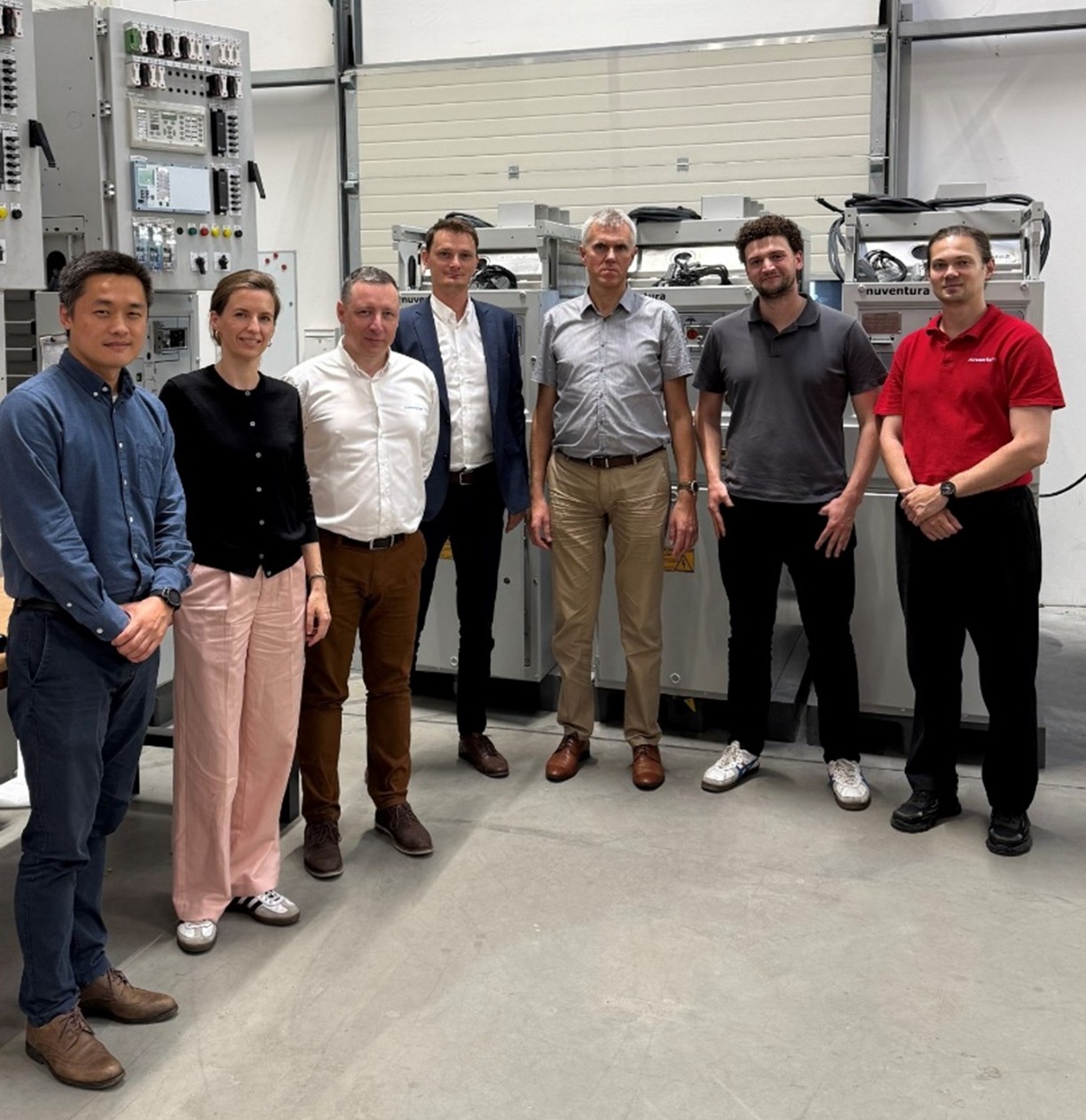
Nuventura and Elgór and Hansen enter partnership to bring SF₆-free switchgear to Poland

Nuventura and WESCOSA join forces to bring F-Gas-free GIS to the Middle East

CO7 and Nuventura announce partnership

Nuventura and PMS join forces for a greener future in power solutions

Introducing Nuventura’s ESG function and Cassidy Kuiper
Project Enquiries
Whether it’s SF₆-free switchgear specifications, partnership opportunities or support – our team is ready to answer your questions and find the right eco-friendly solution for your needs.
If you are evaluating SF₆-free switchgear for a new project or looking to replace conventional GIS, our team can help you define the right technical solution. We support customers with product specifications, project planning, partnership discussions and technical clarification throughout the decision-making process. Whether the application is utility, industrial or renewable energy, we work with you to identify the most suitable configuration for your requirements. Contact us to discuss your project in more detail and explore the best SF₆-free option for your application.
Do you have a specific request?
Get in touch