
News
Type-Tested MV Switchgear Under IEC 62271-200
Medium-voltage switchgear is a critical part of every electrical network. Whether installed in a primary substation, an industrial facility or a renewable plant, operators rely on switchgear to perform safely under normal operation and to withstand extreme conditions when faults occur.
To guarantee this, manufacturers must demonstrate compliance with IEC 62271-200, the international standard governing metal-enclosed switchgear and controlgear. The heart of this compliance process is type-testing: a rigorous series of mechanical, thermal, dielectric and arc-fault tests designed to validate that a switchgear design can perform reliably over its lifetime. This article walks through the full IEC 62271-200 type-testing journey, explains why each type test matters, and highlights how modern SF₆-free GIS meets all these requirements.
What Is Type-Tested Switchgear and Why Does Type Testing Matter?
Type-testing verifies that a specific switchgear design meets IEC performance and safety criteria. It is performed only once per design, using fully assembled panels that represent the final manufactured product. Type-testing provides assurance that:
- The design can handle maximum rated currents
- Insulation withstands the dielectric stress of rated voltage
- The enclosure contains an internal arc fault
- Thermal limits are not exceeded
- Mechanical endurance is sufficient for expected operations
Successful type-testing gives utilities and EPCs confidence that equipment will behave predictably in the field, including under fault conditions. This matters even more as networks shift toward SF₆-free technologies, where buyers want evidence that alternatives match or exceed legacy SF₆ performance.
How IEC Type-Testing Differs for Medium-Voltage and Low-Voltage Switchgear
The governing standard depends on voltage level. Medium voltage switchgear (above 1 kV) is type-tested under IEC 62271-200. For low voltage switchgear and controlgear assemblies (up to 1000 V AC), the equivalent framework is IEC 61439-1 and IEC 61439-2, which define the type tests for low-voltage switchgear assemblies such as temperature rise, dielectric properties and short-circuit withstand. The principle is the same in both worlds: a representative assembly is proven by type test so that every later unit can be trusted.
The IEC 62271-200 Switchgear Testing Journey: The Type Tests, Step by Step
IEC 62271-200 requires a comprehensive set of tests. Although manufacturers can perform them in different sequences, the full journey typically follows the flow below.
Temperature-Rise Test
Purpose: ensure conductors, busbars, contacts and internal parts do not overheat under rated current. Rated current is applied for several hours until temperatures stabilise, resistance is compared before and after the temperature rise, hotspots are measured at predefined locations, and the maximum ambient temperature is considered. It matters because overheating accelerates insulation ageing and can trigger failures.
Short-Time Withstand & Peak Withstand Tests (Thermal & Dynamic)
Purpose: verify that the switchgear can withstand fault currents without deformation or damage. Typical ratings are 16 kA, 25 kA and 31.5 kA for 1 second, with a peak current of 2.5 times the RMS short-circuit level. The tests check busbar strength, contact stability (electrical, mechanical, thermal) and the mechanical robustness of conductors and supports. It matters because real faults impose extreme electrodynamic forces, and the equipment must remain safe and stable.
Dielectric Tests (Power Frequency & Lightning Impulse)
Purpose: validate insulation performance under high-voltage stress. In the power frequency withstand test, an elevated 50/60 Hz voltage is applied for 1 minute to check insulation integrity in normal operation. In the lightning impulse withstand test, a standard 1.2/50 μs impulse wave simulates lightning or switching surges. These tests also confirm that clearances and creepage distances are sufficient. It matters because dielectric failure is one of the most catastrophic failure modes in MV equipment.
Internal Arc Classification (IAC) Tests
Purpose: demonstrate operator safety in case of an internal arc, one of the most technically demanding tests. Typical classifications are IAC AFL (front and lateral) and IAC AFLR (front, lateral and rear), rated at 16 / 25 / 31.5 kA for 1 second. A controlled fault is initiated inside the panel, gases and pressure waves must be safely evacuated, doors and covers must remain closed, and no burning or harmful fragments may escape. It matters because internal arc safety is one of the top requirements in modern substation design. For SF₆-free GIS, dry-air insulated GIS passes the same tests as SF₆ GIS while avoiding the toxic arc by-products of SF₆.
Mechanical Operations and Endurance Testing
Purpose: verify that switching devices operate reliably over their lifetime. Typical requirements range from 2,000 to 10,000 mechanical operations depending on breaker class, and interlocking systems must remain functional throughout. It matters because frequent switching, for example in renewables or industrial sites, stresses moving parts.
Tightness Test (for Gas-Filled Compartments)
Purpose: demonstrate long-term gas containment. SF₆ GIS must prove extremely low leakage rates (below 0.1% per year) with mandatory gas density monitoring. For SF₆-free GIS (dry air or clean air), tightness is still required to maintain pressure and dielectric strength, but the consequences of leakage are non-hazardous and no gas handling procedures are needed. It matters because gas leakage affects dielectric strength, maintenance cost and safety.
Auxiliary and Control Circuit Tests
Purpose: ensure relays, wiring, terminals and control devices withstand thermal and dielectric stress. This includes a dielectric test on low-voltage circuits, verification of interlocks, and functional tests of position indicators and motor drives. It matters because modern substations rely on automation, so control reliability is critical.
Degree of Protection (IP Code) Tests
Purpose: validate the enclosure's resistance to dust, the mechanical ingress of tools or hands, and water ingress. Typical levels are IP3X to IP4X for indoor use (protection against fingertips and wires, no water protection) and IP54 or IP65 for outdoor or harsh environments (protection against dust and water).
Making and Breaking Capacity Tests (for Circuit Breakers)
Purpose: ensure breakers can interrupt and close onto fault currents safely. Performed according to IEC 62271-100, these tests cover short-circuit interruption (under partial and full fault current), capacitive switching and auto-reclosing performance. For GIS, this confirms breaker reliability under demanding grid conditions.
Type-Testing vs Routine Testing: What’s the Difference?
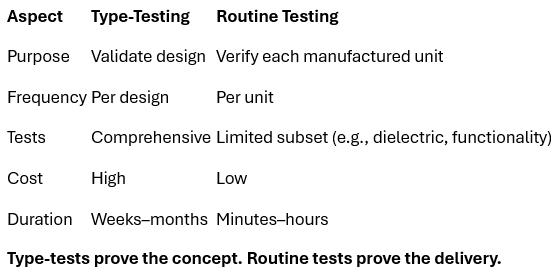
Type-testing and routine testing serve different purposes. Type-testing is performed once on a representative design to verify that the design meets IEC requirements. Routine testing is performed on every manufactured unit before it leaves the factory, checking workmanship and basic function rather than re-proving the design. A type-tested design combined with routine testing on each panel is what separates certified switchgear from non-type-tested assemblies, which is why type-test certificates carry so much weight in procurement.
How SF₆-Free GIS Meets the IEC 62271-200 Type Tests
Modern SF₆-free GIS is fully capable of meeting all type-test requirements: the same thermal and dielectric performance, the same short-circuit withstand levels, the same internal arc performance (AFLR up to 31.5 kA), the same mechanical endurance, and the same protection and automation integration. It adds one critical safety advantage: low toxic by-products during arc faults or partial discharge events.
Why Type-Tested Switchgear Matters for Buyers and Specifiers
Knowing the IEC 62271-200 testing journey helps procurement teams write clearer tender specifications, evaluate different technologies objectively, compare SF₆ and SF₆-free alternatives, understand safety and reliability margins, and avoid equipment with insufficient testing depth. Including type-test certificates in procurement documentation is now standard best practice.
Choosing Type-Tested MV Switchgear
Type-testing according to IEC 62271-200 is one of the most important steps in ensuring the safety, reliability and performance of medium-voltage switchgear. From thermal and dielectric tests to extreme internal arc trials, the process validates that the equipment can withstand real-world electrical stresses. As the industry transitions away from SF₆, type-testing provides the reassurance that SF₆-free GIS delivers equivalent, and often superior, performance while eliminating environmental and safety risks. Understanding this journey helps utilities, EPCs and industrial operators make informed, future-proof decisions when specifying MV switchgear and its installation in the next generation of substations.
Stay informed and inspired
You can also stay informed and inspired by subscribing to our quarterly newsletter

More News

.png)


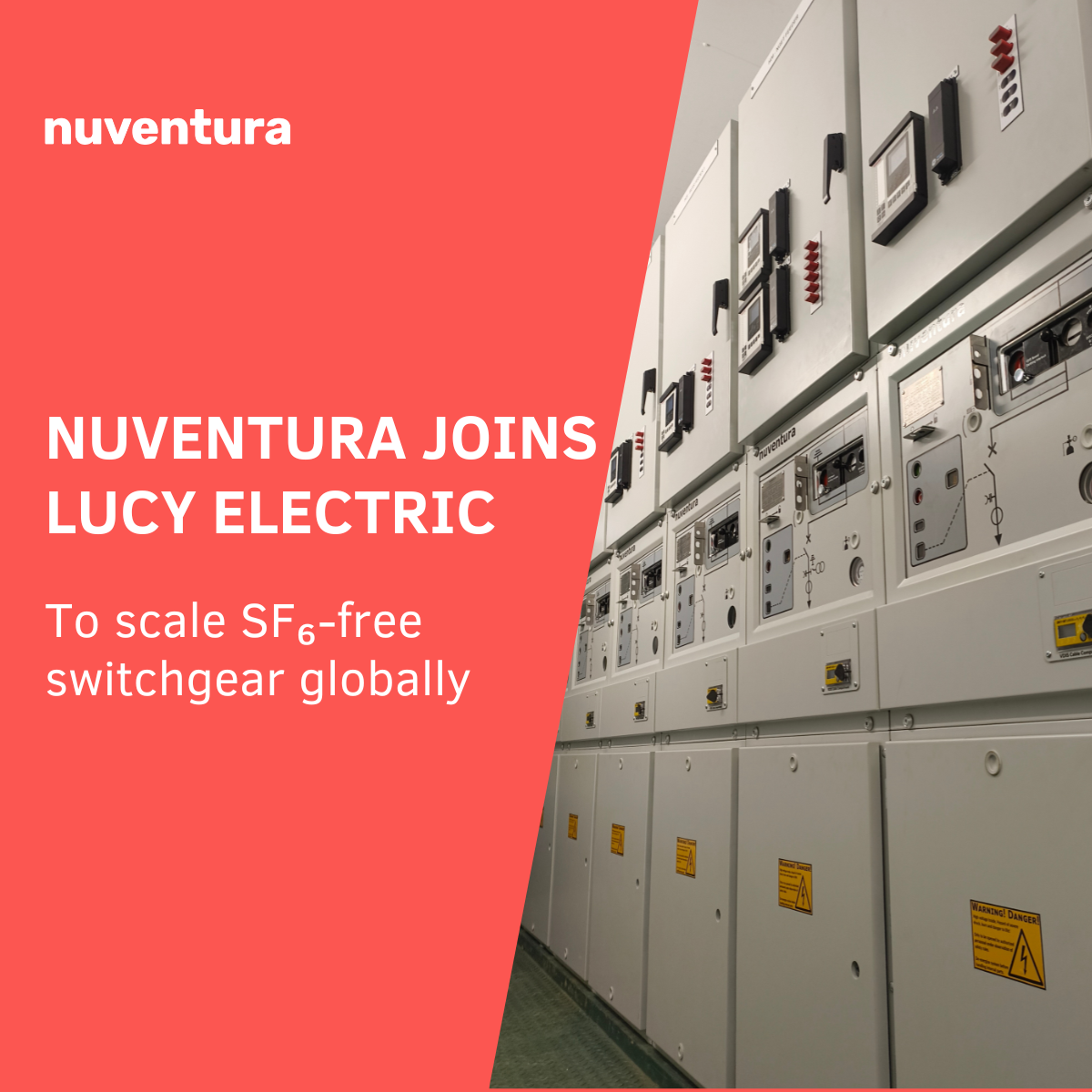
Nuventura joins Lucy Electric to accelerate global adoption of SF₆-free primary switchgear

Total Cost of Ownership: SF₆ GIS vs SF₆-Free Dry-Air GIS
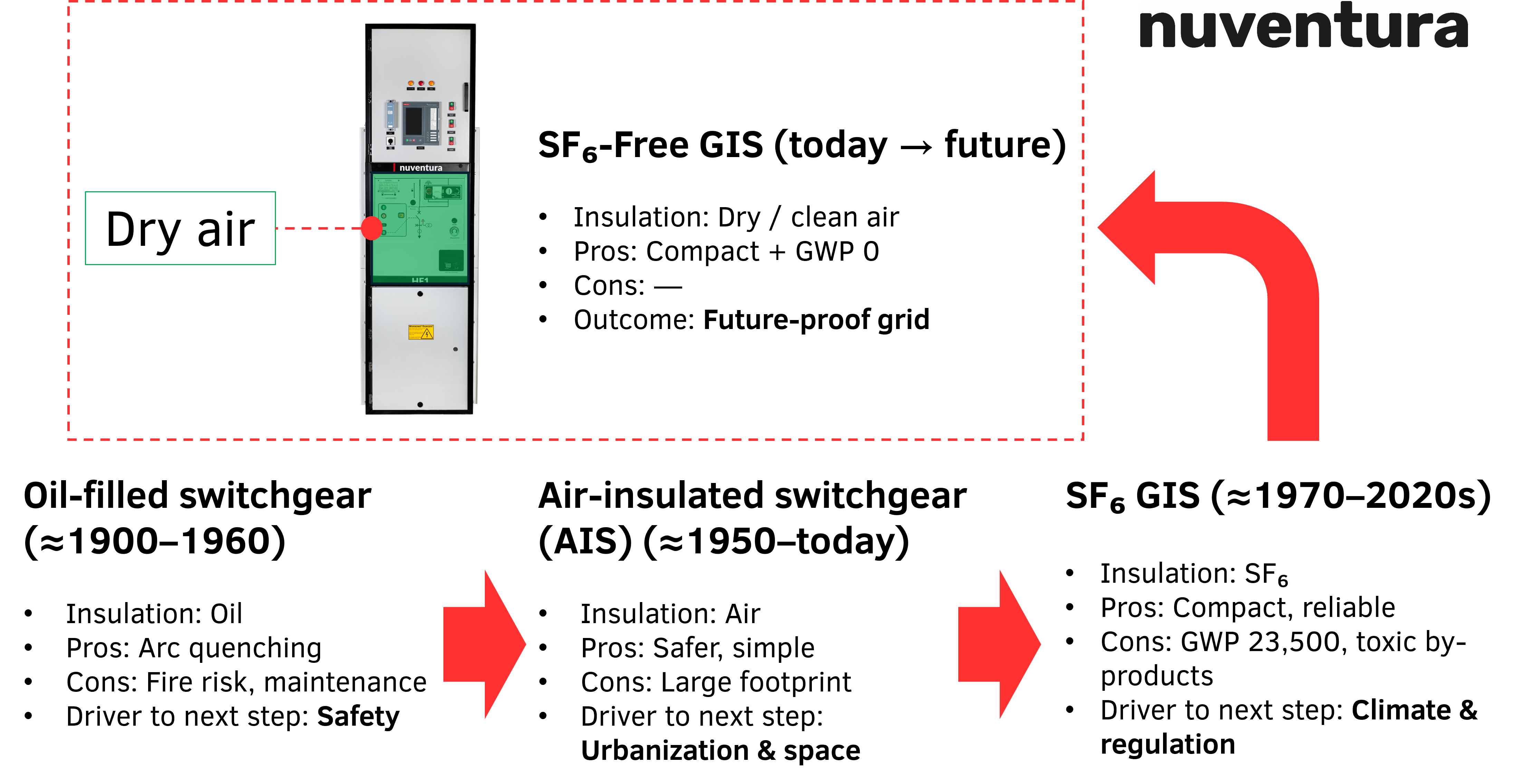
The Evolution of MV Switchgear: From Oil → AIS → SF₆ → SF₆-Free GIS
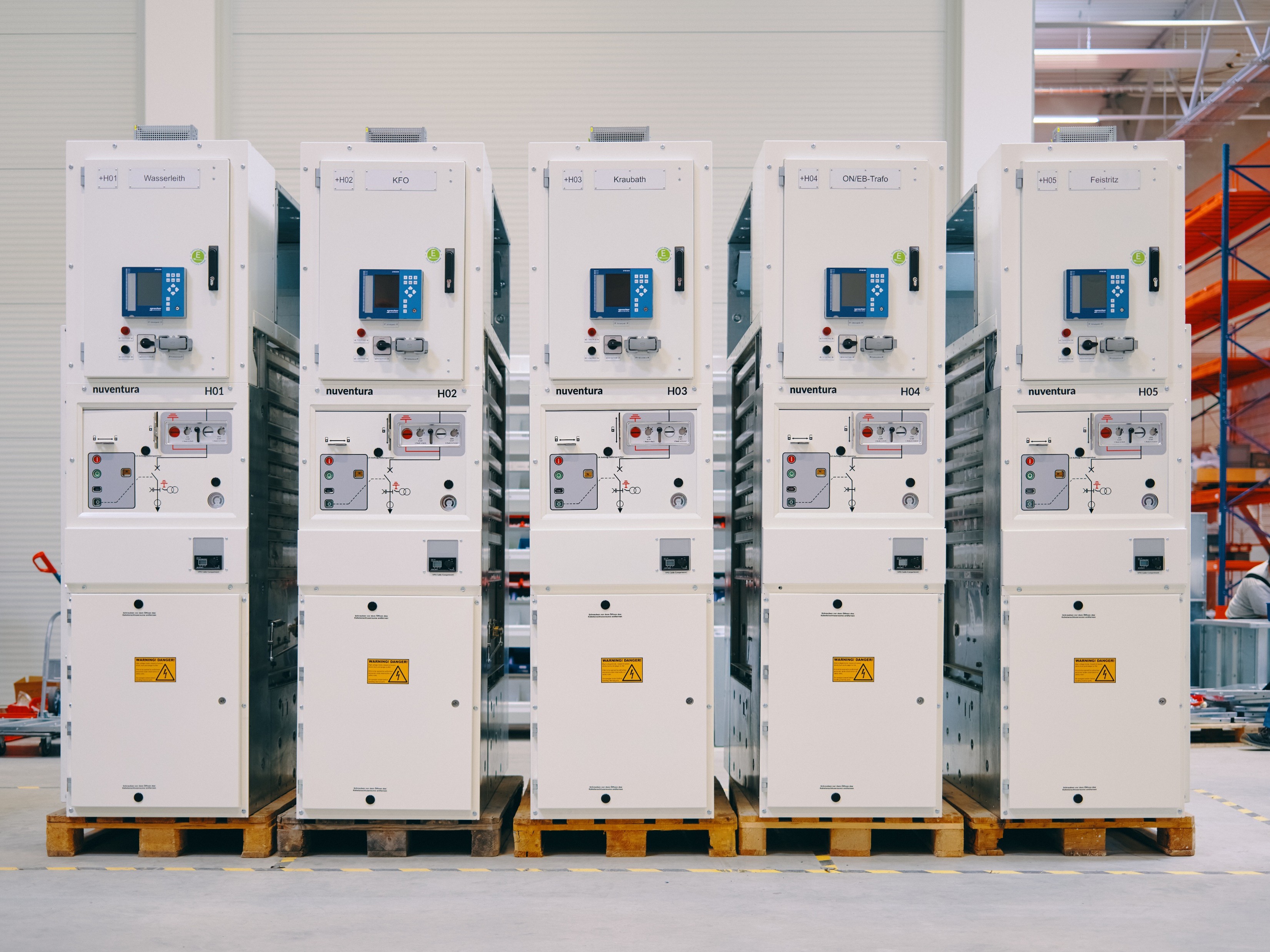
The Carbon Footprint of SF₆ vs SF₆-Free Switchgear
What Utilities Must Consider in Tender Specifications for SF₆-Free GIS
.png)
Type-Tested MV Switchgear Under IEC 62271-200
_sz3.jpg)
Partial Discharge in MV Switchgear: Causes & Detection
.png)
Key Differences between Primary and Secondary GIS Switchgear
Internal Arc Classification Explained (IAC AFLR, 16/25/31.5 kA Basics)
Environmental Advantages and Potential Carbon Credits to SF₆-free Switchgear in the Indian Context
SF₆ Regulations: What’s Changing (2026–2035)? And Where?
Explanation of the relay protection functions required in MV grids
AIS vs GIS — Combining the Best of Both Worlds with SF₆-Free Technology
Why Voltage Levels Matter in Medium-Voltage Grids
Protection Relays – The Intelligence Behind Medium-Voltage Switchgear
Raising the Bar for Switchgear Safety
Nuventura and Elgór and Hansen enter partnership to bring SF₆-free switchgear to Poland
Nuventura and WESCOSA join forces to bring F-Gas-free GIS to the Middle East

CO7 and Nuventura announce partnership

Nuventura and PMS join forces for a greener future in power solutions

Introducing Nuventura’s ESG function and Cassidy Kuiper
Project Enquiries
Whether it’s SF₆-free switchgear specifications, partnership opportunities or support – our team is ready to answer your questions and find the right eco-friendly solution for your needs.
If you are evaluating SF₆-free switchgear for a new project or looking to replace conventional GIS, our team can help you define the right technical solution. We support customers with product specifications, project planning, partnership discussions and technical clarification throughout the decision-making process. Whether the application is utility, industrial or renewable energy, we work with you to identify the most suitable configuration for your requirements. Contact us to discuss your project in more detail and explore the best SF₆-free option for your application.
Do you have a specific request?
Get in touch