
News
Key Differences between Primary and Secondary GIS Switchgear
Medium-voltage gas-insulated switchgear (GIS) is used across a wide range of applications, from compact secondary substations in urban areas to large, complex primary substations feeding industrial plants and high-capacity distribution networks.
Although both primary GIS and secondary GIS operate at similar voltage levels (typically 12 to 36 kV), their design philosophies, performance requirements, protection schemes and mechanical layouts differ substantially. Understanding these key differences helps EPCs, DSOs and industrial operators select the right type of switchgear, especially as the market shifts toward SF₆-free GIS alternatives. This article explains the design considerations for primary vs secondary switchgear and shows how modern SF₆-free GIS meets the requirements of both segments.
Primary vs Secondary: Where Each Sits in the Grid
In the distribution of electricity, primary and secondary describe successive stages of power distribution. Primary distribution carries power at medium voltage from primary substations, the interface with high-voltage transmission, out to the network. Secondary distribution then steps this down through distribution transformers toward low voltage (LV) for end users. Primary switchgear governs the first, higher-energy stage of this transmission and distribution chain; secondary switchgear operates closer to the load. Both are medium voltage switchgear, but their duties differ.
What Is Secondary Switchgear?
Secondary GIS is typically used in secondary distribution networks, where loads are smaller, protection schemes are simpler and switching operations are infrequent. Typical characteristics of secondary switchgear:
- Operating voltages: 12 to 24 kV (sometimes 36 kV)
- Low rated currents: 400 / 630 A
- Short-circuit levels: 16 kA or even lower
- Applications: Ring Main Units (RMUs), distribution substations in urban and rural grids, rooftop or basement substations, commercial buildings and small renewable plants
- Switching frequency: low
- Functional units: simple feeder panels, load-break switches and fuse protection
Secondary switchgear prioritises compactness, simplicity, affordability and ease of installation. The classic example is the ring main unit, a compact, metal-enclosed secondary distribution switchgear built for space-constrained sites.
What Is Primary Switchgear?
Primary GIS is installed at primary substations, where MV networks interface with transmission grids or large-scale industrial infrastructure. Typical characteristics of primary distribution switchgear:
- Operating voltages: 24 to 36 kV
- Rated currents: 1250 A up to 2000 A and more
- Short-circuit levels: 25 to 31.5 kA and more
- Applications: large utility primary substations, industrial plants (steel, chemical, automotive), data centres and utility-scale wind and solar substations
- Switching frequency: medium to high
- Functional units: circuit breakers, PT/CT measurement bays, busbar sectionalizers, earthing switches and protection relays (distance, differential, feeder protection)
Primary switchgear prioritises performance, reliability, protection capability and safe maintainability.
Key Design Differences Between Primary and Secondary Switchgear
Switching & Interruption Technology
Secondary GIS often uses load-break switches, and fuse-switch combinations are common, with full circuit breakers optional. Primary GIS relies heavily on full circuit breakers that must interrupt higher fault currents, so it needs stronger mechanical components; current transformers and protection relays act in combination with the circuit breakers. This determines the thermal and mechanical sizing of busbars, contacts and enclosure strength.
Protection Philosophy
Secondary GIS often uses shared compartments, an Internal Arc Classification (IAC) of typically AFL, and smaller-scale pressure relief. Primary GIS requires strict separation of the cable, breaker, busbar and VT/CT compartments, IAC requirements typically at AFLR 25 to 31.5 kA / 1 s, and larger, more complex pressure-relief ducts. Higher arc-fault currents demand a more robust mechanical design.
Compartmentalization and Safety Requirements
Secondary GIS often uses shared compartments, an Internal Arc Classification (IAC) of typically AFL, and smaller-scale pressure relief. Primary GIS requires strict separation of the cable, breaker, busbar and VT/CT compartments, IAC requirements typically at AFLR 25 to 31.5 kA / 1 s, and larger, more complex pressure-relief ducts. Higher arc-fault currents demand a more robust mechanical design.
Busbar Systems and Expandability
Secondary GIS is usually built on a single busbar with limited expansion options, compact and modular for space-constrained installations. Primary GIS offers single or double busbar options, bus sectionalizers, larger cable bays and flexible future expandability.
Maintenance & Accessibility
Secondary GIS is typically "sealed for life", needs minimal maintenance and is designed for non-specialist technicians. Primary GIS is also "sealed for life" but not fully welded, allowing repair, and requires access for CT/VT maintenance, relay testing and arc-protection systems, supporting multiple maintenance conditions (de-energised, earthed, isolated). This affects panel dimensions, doors, interlocking and safety protocols.
How SF₆-Free GIS fits into Primary vs Secondary Requirements
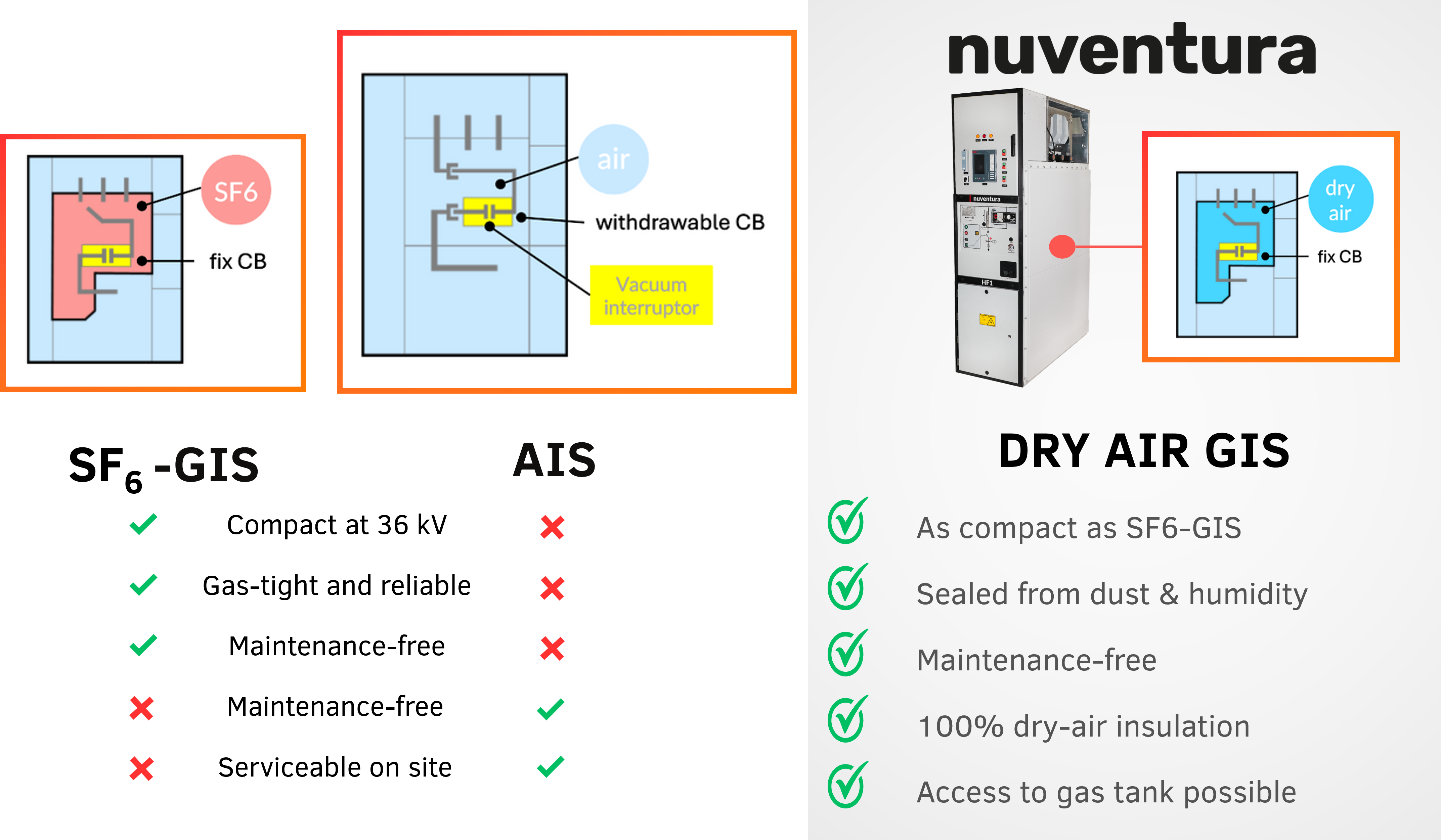
Modern SF₆-free GIS using dry air insulation can serve both segments effectively, though design strategies differ. Compared with traditional air-insulated switchgear (AIS), it keeps the compact footprint of GIS while removing SF₆ entirely.
In Secondary Applications
Here SF₆-free GIS offers similar compactness to an SF₆ RMU, no SF₆ decomposition by-products and a lower-OPEX, simpler service model, ideal for utilities looking to decarbonise large installed bases of secondary substations.
In Primary Applications
Primary GIS imposes more demanding requirements, but SF₆-free technology has now matured enough to meet them. It achieves IAC AFLR 25 to 31.5 kA performance with a robust mechanical design, produces no toxic by-products during arcs, and enables easier end-of-life processes with no gas reclamation. This makes it attractive for data centres, industry and large utilities with strict ESG goals, the setting where the carbon and safety advantages of SF₆-free insulation become most valuable.
What Buyers Should Consider When Choosing Between Primary & Secondary GIS
Technical criteria: fault level (16 / 25 / 31.5 kA), rated currents, number of feeders and switching frequency, grid topology (single or double busbar), protection relay requirements, IAC classification, cable termination sizes and CT/VT measurement needs.
Operational criteria: maintenance philosophy, operator competence, expected grid expansions, and remote control and SCADA requirements.
Sustainability and compliance: upcoming regulatory restrictions (EU F-Gas Regulation 2024/573), avoidance of SF₆ handling, and corporate net-zero policies.
Primary vs Secondary Switchgear in Real Applications
Primary and secondary switchgear share a common purpose, safe and reliable MV distribution, but their design priorities differ fundamentally. Secondary switchgear focuses on compactness and simplicity, whereas primary switchgear emphasises switching performance, arc safety and flexible grid operation. With the growing shift toward SF₆-free technology, both primary and secondary applications now have modern, sustainable alternatives that meet or exceed the performance of legacy SF₆ equipment. Whether in compact city substations or high-demand industrial facilities, SF₆-free GIS supports safer operation, lower environmental impact and future-ready grid design.
Stay informed and inspired
You can also stay informed and inspired by subscribing to our quarterly newsletter

More News

.png)



Nuventura joins Lucy Electric to accelerate global adoption of SF₆-free primary switchgear

Total Cost of Ownership: SF₆ GIS vs SF₆-Free Dry-Air GIS
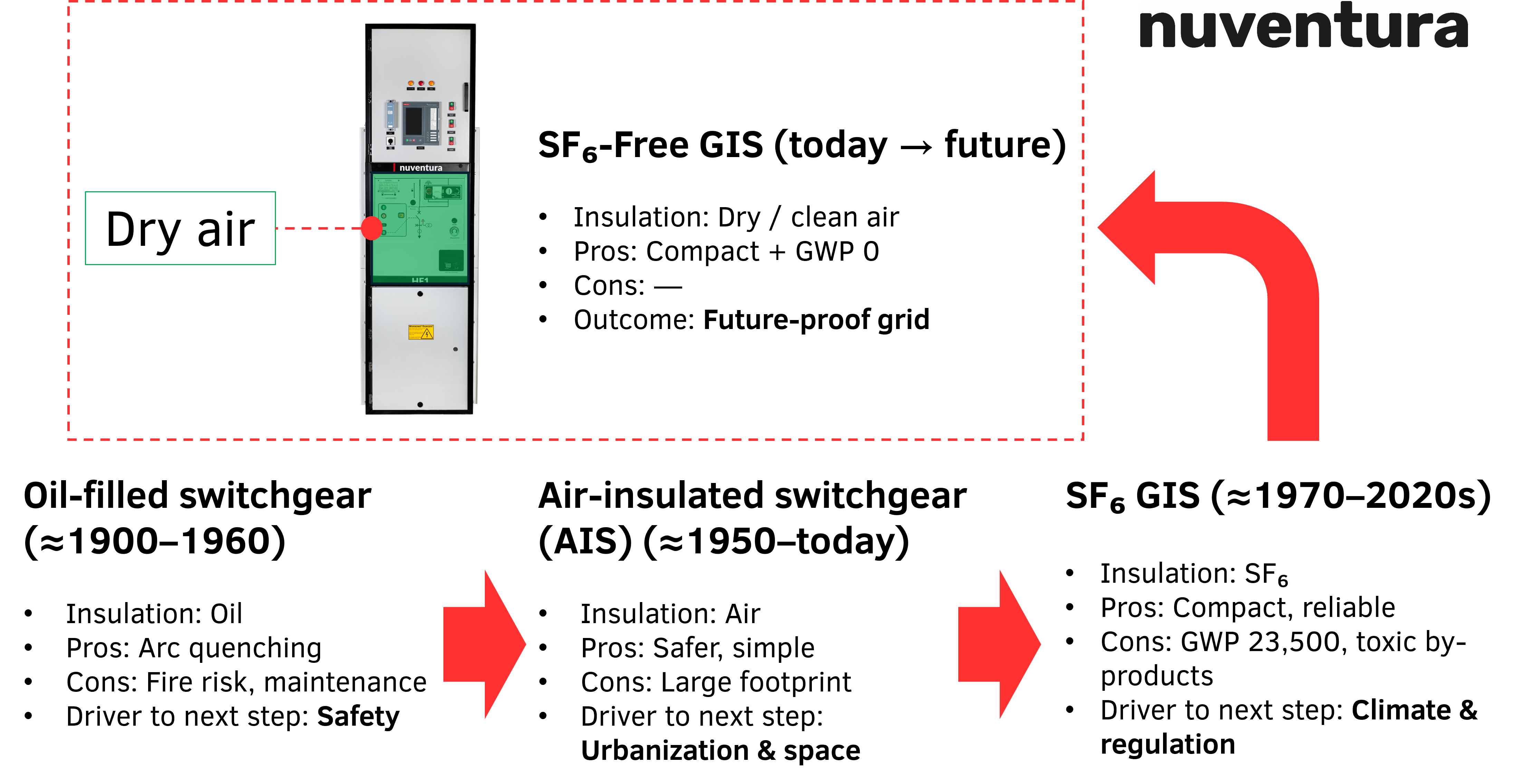
The Evolution of MV Switchgear: From Oil → AIS → SF₆ → SF₆-Free GIS
The Carbon Footprint of SF₆ vs SF₆-Free Switchgear
What Utilities Must Consider in Tender Specifications for SF₆-Free GIS
.png)
Type-Tested MV Switchgear Under IEC 62271-200
_sz3.jpg)
Partial Discharge in MV Switchgear: Causes & Detection
.png)
Key Differences between Primary and Secondary GIS Switchgear
Internal Arc Classification Explained (IAC AFLR, 16/25/31.5 kA Basics)
Environmental Advantages and Potential Carbon Credits to SF₆-free Switchgear in the Indian Context
SF₆ Regulations: What’s Changing (2026–2035)? And Where?
Explanation of the relay protection functions required in MV grids
AIS vs GIS — Combining the Best of Both Worlds with SF₆-Free Technology
Why Voltage Levels Matter in Medium-Voltage Grids
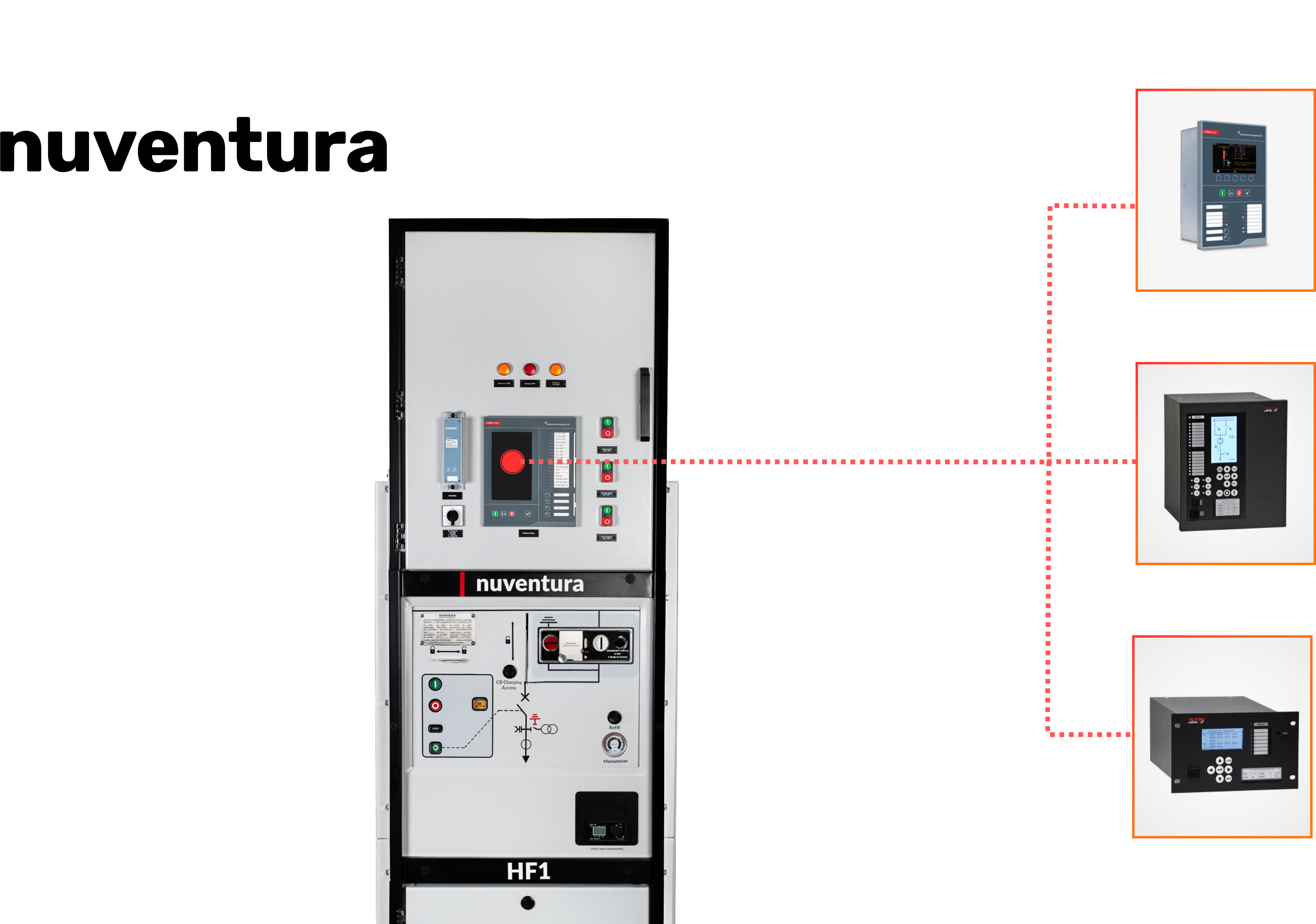
Protection Relays – The Intelligence Behind Medium-Voltage Switchgear
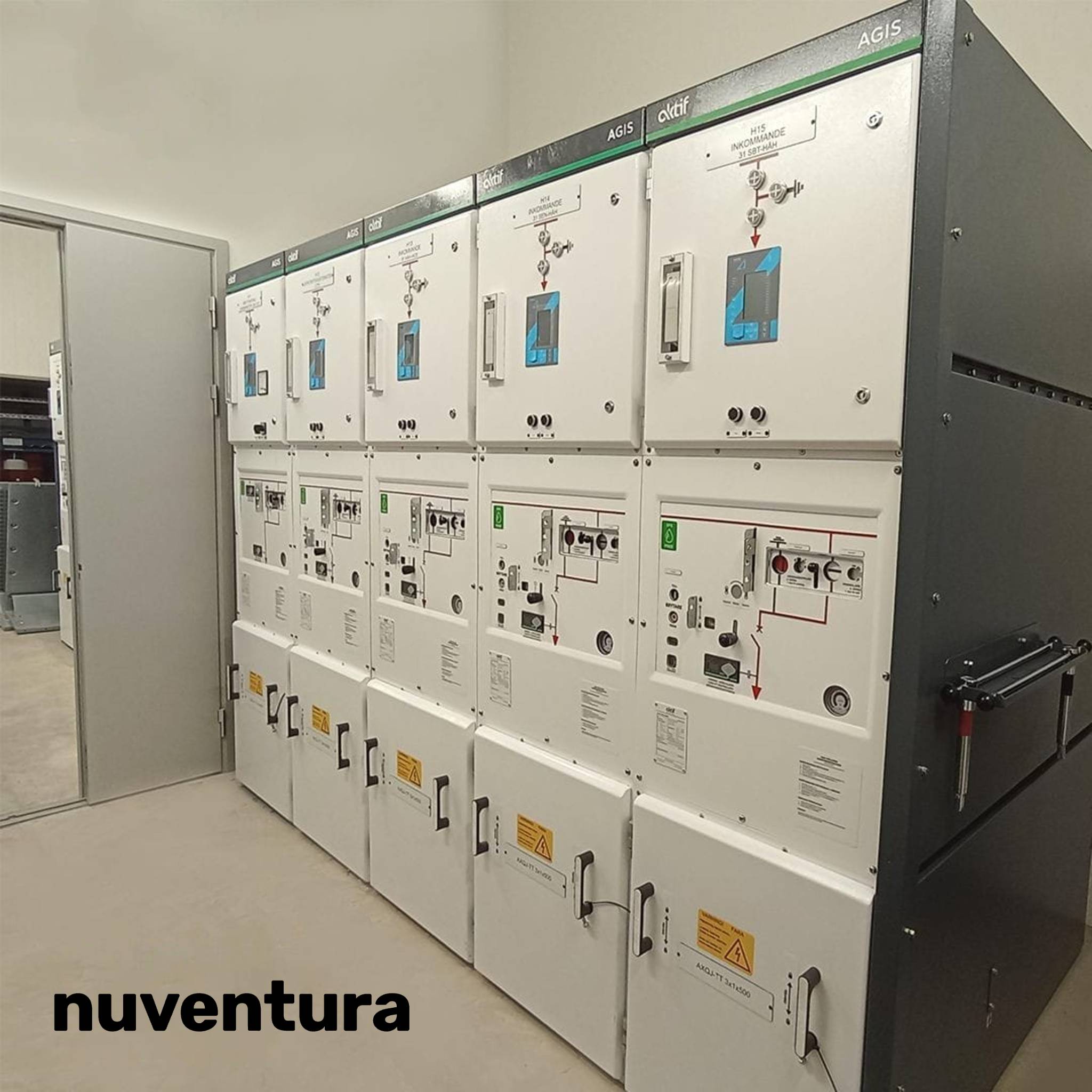
Raising the Bar for Switchgear Safety
Nuventura and Elgór and Hansen enter partnership to bring SF₆-free switchgear to Poland

Nuventura and WESCOSA join forces to bring F-Gas-free GIS to the Middle East

CO7 and Nuventura announce partnership

Nuventura and PMS join forces for a greener future in power solutions

Introducing Nuventura’s ESG function and Cassidy Kuiper
Project Enquiries
Whether it’s SF₆-free switchgear specifications, partnership opportunities or support – our team is ready to answer your questions and find the right eco-friendly solution for your needs.
If you are evaluating SF₆-free switchgear for a new project or looking to replace conventional GIS, our team can help you define the right technical solution. We support customers with product specifications, project planning, partnership discussions and technical clarification throughout the decision-making process. Whether the application is utility, industrial or renewable energy, we work with you to identify the most suitable configuration for your requirements. Contact us to discuss your project in more detail and explore the best SF₆-free option for your application.
Do you have a specific request?
Get in touch